Table Of Content
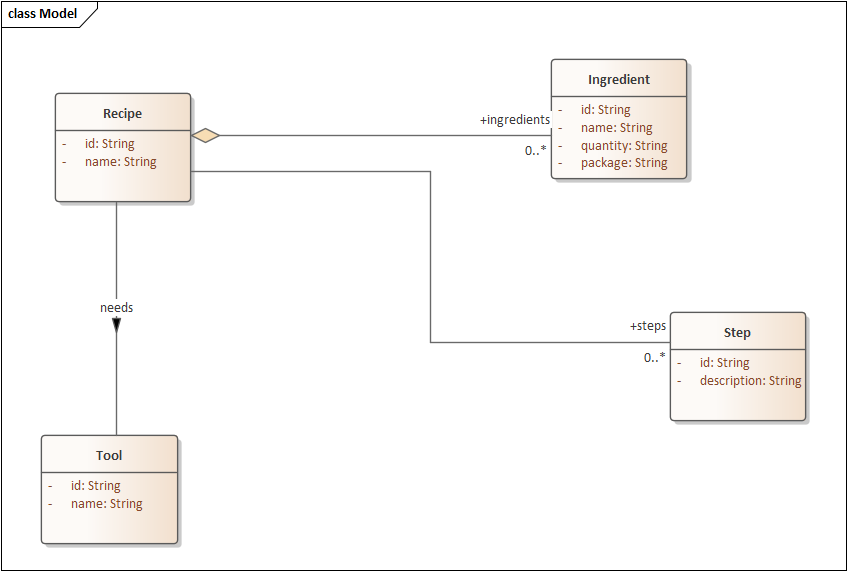
Thanks to this, we can easily test them without mocking mentioned parts. Bounded contexts actually represent boundaries in which a certain subdomain is defined and applicable. When a subdomain within the bounded context changes, the entire system doesn’t have to change too. Bounded context is a central pattern in domain-driven design that contains the complexity of the application. This is where you implement the code, after you’ve defined the domain and the subdomains. Microservices is an architecture design model with a specific bounded context, configuration, and dependencies.
The Complexity Challenge
This is a project of a library, driven by real business requirements.We use techniques strongly connected with Domain Driven Design, Behavior-Driven Development,Event Storming, User Story Mapping. In domain-driven design, an object's creation is often separated from the object itself. Ubiquitous language is one of the pillars of DDD together with strategic design and tactical design. For example, an OrderService might provide methods for processing orders, applying discounts, and calculating shipping costs. Please note application will be run with local Spring profile to setup some initial data.
Kinds of models
Talking about inter-aggregate communication, we must remember that events reduce coupling, but don't removeit completely. Thus, it is very vital to share(publish) only those events, that are necessary for otheraggregates to exist and function. Otherwise there is a threat that the level of coupling will increaseintroducing feature envy, because other aggregates might start using those events to perform actionsthey are not supposed to perform. A solution to this problem could be the distinction of domain eventsand integration events, which will be described here soon. On the other hand, value objects don’t have unique identifiers.
Similar Reads
The name comes from a 2003 book by Eric Evans that describes the approach through a catalog of patterns. Since then a community of practitioners have further developed the ideas, spawning various other books and training courses. The approach is particularly suited to complex domains, where a lot of often-messy logic needs to be organized. If we are talking about hexagonal architecture, it lets us separate domain and application logic fromframeworks (and infrastructure).
These aspects of domain-driven design aim to foster a common language shared by domain experts, users, and developers—the ubiquitous language. The ubiquitous language is used in the domain model and for describing system requirements. Aggregates discovered during Event Storming sessions communicate with each other with events. There isa contention, though, should they be consistent immediately or eventually? As aggregates in generaldetermine business boundaries, eventual consistency sounds like a better choice, but choices in softwareare never costless.
Eric Evans at Domain-Driven Design Europe 2019 explains the different bounded context types and their relat... - Packt Hub
Eric Evans at Domain-Driven Design Europe 2019 explains the different bounded context types and their relat....
Posted: Tue, 17 Dec 2019 08:00:00 GMT [source]
Events
Moreover, they will be useful to meet the requirements of your business. This is where your business rules define the way data gets created, stored, and modified. While domain-driven design is compatible with model-driven engineering and model-driven architecture,[6] the intent behind the two concepts is different. Model-driven architecture is more concerned with translating a model into code for different technology platforms than defining better domain models. The idea that software systems need to be based on a well-developed model of a domain has been around for at least as long as I've been in the industry.
Relationship to other ideas
How Domain-Driven Design Aids in the Planning of Microservices Architecture - The New Stack
How Domain-Driven Design Aids in the Planning of Microservices Architecture.
Posted: Tue, 15 Sep 2015 07:00:00 GMT [source]
I learned much of this thinking from Jim Odell, who developed this style of thinking with data modeling, information engineering, and object-oriented analysis. Representing the underlying domain was a key part of much work in the database and object-oriented communities throughout the 1980s and 1990s. A value object is a domain object that represents a conceptually immutable value. Unlike entities, value objects do not have a distinct identity and are typically used to represent attributes or properties of entities. Value objects are equality-comparable based on their properties, rather than their identity. As we already mentioned, the architecture was driven by Event Storming sessions.

ArchUnit lets you write unit tests of your architecture, so that it is always consistent with initialvision. Maven modules could be an alternative as well, but let's focus on the former. Event Storming is a workshop format for quickly exploring complex business domains. When part of a program's functionality does not conceptually belong to any object, it is typically expressed as a service. DEV Community — A constructive and inclusive social network for software developers. In this extensive collection of articles, we'll embark on a journey into the world of DDD.
Languages
Providing eventual consistency requires some infrastructural tools, like message brokeror event store. That's why we could (and did) start with immediate consistency. Domain-driven design is a software engineering approach to solving a specific domain model. The solution circles around the business model by connecting execution to the key business principles. This layer has all the information about the business case and the business rules.
Moreover, the team can also work on it independently, which is, in fact, the point of the microservice architecture. The book introduced the notion of classifying objects into Entities, Value Objects, and Service Objects - what I call the Evans Classification and identifying the concept of Aggregates. I found these filled an important gap in thinking about objects which eluded both programming languages and diagrammatic notations. A particularly important part of DDD is the notion of Strategic Design - how to organize large domains into a network of Bounded Contexts. Until that point, I'd not seen anyone tackle this issue in any compelling way. This series is tailored for senior developers and software architects who want to master the art of Domain-Driven Design.
These result from the architectural principles of the domain-driven design and DevOps. Domain-driven design is the idea of solving problems of the organization through code. The aggregate root is responsible for performing the logic of the operation and either yielding a failure response or just mutating its own state that can be written to a data store. The command handler pulls in infrastructure concerns related to saving the aggregate root's state and creating needed contexts (e.g., transactions).

Any patron with more than two overdue checkouts at a librarybranch will get a rejection if trying a hold at that same library branch. Check for overdue checkouts is done by taking a look atdaily sheet with overdue checkouts. Patron interacts with his/her current holds, checkouts, etc.by taking a look at patron profile. Patron profile looks like a daily sheet, but theinformation there is limited to one patron and is not necessarily daily.




No comments:
Post a Comment